
Mathematics plays a crucial role in shaping a student’s analytical, logical, and problem-solving abilities. During secondary school, math becomes more complex as students transition from basic arithmetic to algebra, geometry, trigonometry, and statistics. Many find this transition challenging, which is why secondary maths tuition in Singapore has become essential for consistent academic success.
This article explores the role of secondary maths tuition, how it supports different learning needs, and why it has become an indispensable part of education in a competitive environment like Singapore’s.
Understanding the Secondary Mathematics Curriculum
The secondary-level mathematics curriculum in Singapore is designed to develop conceptual understanding, procedural fluency, and logical reasoning. The curriculum is rigorous, preparing students for O-Level or IP (Integrated Programme) examinations.
Here’s a quick overview of what secondary students typically study:
| Level | Core Topics |
|---|---|
| Lower Secondary (Sec 1–2) | Algebraic expressions, geometry, ratios, percentages, number patterns, and simple equations |
| Upper Secondary (Sec 3–4/5) | Trigonometry, quadratic equations, coordinate geometry, differentiation, integration, probability, and statistics |
Students are also expected to apply these concepts in real-world contexts and problem-solving scenarios — skills that often require guidance beyond school lessons.
Why Many Students Struggle with Secondary Maths
Even strong students can face difficulties in secondary mathematics due to a variety of factors. Common challenges include:
- Conceptual Gaps: Weak understanding of earlier topics such as fractions or algebra can affect progress in advanced topics.
- Fast-Paced Curriculum: The syllabus moves quickly, and there’s little time to revisit weak areas in school classes.
- Exam Pressure: O-Level assessments demand not only accuracy but also time management and clarity of presentation.
- Different Learning Styles: Students grasp mathematical concepts at different speeds.
- Lack of Practice: Mathematics mastery depends heavily on consistent problem-solving exercises.
Secondary maths tuition helps address all these issues through structured learning and personalised attention.
The Role of Secondary Maths Tuition
A dedicated tuition programme provides targeted support that complements school learning. Tuition does not simply repeat lessons; it enhances understanding through reinforcement, guided practice, and feedback.
Key roles of secondary maths tuition include:
- Reinforcing Classroom Learning: Revisiting school topics for deeper comprehension.
- Bridging Knowledge Gaps: Strengthening weak areas that hinder overall performance.
- Preparing for Exams: Developing exam-specific strategies, including question analysis and time management.
- Building Confidence: Helping students overcome math anxiety and develop self-belief.
- Encouraging Independent Thinking: Training students to analyse problems critically rather than memorise solutions.
Through consistent practice and feedback, students gain both speed and accuracy — the two pillars of success in math examinations.
Benefits of Enrolling in Secondary Maths Tuition
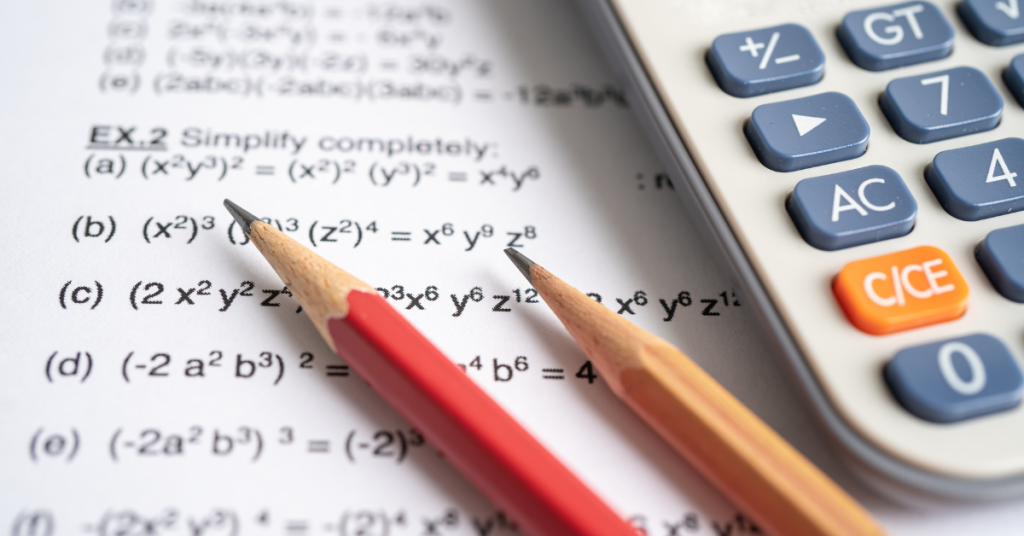
Secondary maths tuition brings measurable academic benefits.
| Benefit | Description |
|---|---|
| Personalised Learning Pace | Tutors adjust lesson speed and difficulty to match individual understanding. |
| Structured Practice | Regular worksheets, quizzes, and mock tests reinforce key concepts. |
| Clear Conceptual Understanding | Tutors simplify complex ideas through step-by-step explanations. |
| Improved Exam Performance | Students learn effective answering techniques and time-saving strategies. |
| Confidence Development | Consistent progress leads to a more positive attitude towards mathematics. |
When students experience improvement, they naturally develop motivation to learn and perform better.
Characteristics of a Good Secondary Maths Tutor
Choosing the right tutor is essential for effective learning. The best secondary maths tutors share certain qualities that make them effective educators:
- Strong Subject Mastery: Deep understanding of the secondary curriculum and its real-world applications.
- Engaging Teaching Methods: Use of examples, visual aids, and analogies to clarify abstract concepts.
- Adaptability: Ability to modify teaching approaches based on students’ strengths and weaknesses.
- Patience and Encouragement: Helping students overcome fear of mistakes and build resilience.
- Proven Track Record: Demonstrated history of helping students achieve distinctions in mathematics.
A skilled tutor not only teaches but also mentors, guiding students to develop critical thinking and discipline.
How Secondary Maths Tuition Is Structured
Effective tuition programmes follow a systematic structure that promotes steady progress and measurable results.
Typical structure includes:
- Diagnostic Assessment: Identifying each student’s current level and weak areas.
- Topic-by-Topic Coverage: Lessons aligned with the school’s teaching schedule.
- Weekly Practice Sessions: Reinforcement through structured exercises.
- Progress Tests: Periodic evaluation of mastery and improvement.
- Exam Preparation: Mock exams and time-based drills closer to assessments.
Such a system ensures continuous learning without last-minute cramming.
Types of Secondary Maths Tuition
There are different tuition formats available in Singapore, allowing students and parents to choose based on learning preferences.
| Type | Description | Ideal For |
|---|---|---|
| Group Tuition | Conducted in small groups, promoting interaction and peer learning. | Students who benefit from collaborative environments. |
| One-on-One Tuition | Personalised attention, focusing entirely on individual needs. | Students who need intensive support or flexible schedules. |
| Online Tuition | Interactive virtual lessons accessible from home. | Tech-savvy students who prefer convenience and flexibility. |
Each format offers unique advantages, but the key lies in the tutor’s ability to engage and guide effectively.
How Tuition Improves Exam Readiness
Exams are a key focus of secondary maths tuition. Tutors train students to handle common question types and exam conditions efficiently.
Key exam preparation strategies include:
- Understanding marking schemes and method marks.
- Prioritising high-weight topics like algebra, trigonometry, and calculus.
- Using formula sheets effectively.
- Managing time across paper sections.
- Learning to check and verify answers quickly.
Through simulated practice tests, students become familiar with exam environments, reducing anxiety and boosting performance.
Building Strong Mathematical Thinking
Maths tuition is not just about getting the right answers — it’s about building a mindset that values logic and problem-solving. Good tutors help students understand why formulas work, not just how to use them.
This approach develops critical skills such as:
- Analytical reasoning
- Logical deduction
- Pattern recognition
- Quantitative thinking
These abilities extend beyond exams and benefit students in science, economics, computing, and other technical fields later in life.
The Role of Parents in Supporting Learning
Parents play a vital role in reinforcing what students learn during tuition. They can:
- Encourage consistent attendance and homework completion.
- Communicate with tutors to monitor progress.
- Create a calm and supportive study environment at home.
- Celebrate small improvements to motivate consistent effort.
When parents, students, and tutors work together, learning outcomes improve significantly.
Long-Term Impact of Secondary Maths Tuition
The impact of effective maths tuition extends beyond immediate academic results. Students develop skills and habits that serve them for years to come.
| Long-Term Benefit | Outcome |
|---|---|
| Strong Foundation | Easier transition to JC, IB, or polytechnic courses involving mathematics. |
| Improved Confidence | Better performance in other analytical subjects. |
| Enhanced Problem-Solving | Ability to apply logical reasoning in real-world scenarios. |
| Career Readiness | Builds quantitative skills valuable in fields like engineering, business, and data science. |
A good grasp of secondary maths sets the stage for academic and professional success.
Choosing the Right Tuition Centre
Parents should select tuition centres with experienced tutors, small class sizes, and proven track records. Some of the best centres also offer diagnostic tools, detailed progress reports, and digital learning platforms to enhance efficiency.
Before enrolling, it’s helpful to attend a trial class or consultation to ensure the teaching approach matches the student’s needs.
Final Thoughts
In Singapore’s competitive academic environment, secondary-level mathematics is both a challenge and an opportunity. With guidance from structured secondary maths tuition, students can turn difficulties into strengths and achieve outstanding results.
The right tuition not only helps students excel in exams but also cultivates analytical skills, confidence, and a lifelong appreciation for logical reasoning — qualities that extend far beyond the classroom.